Author

Emily James

Advertising

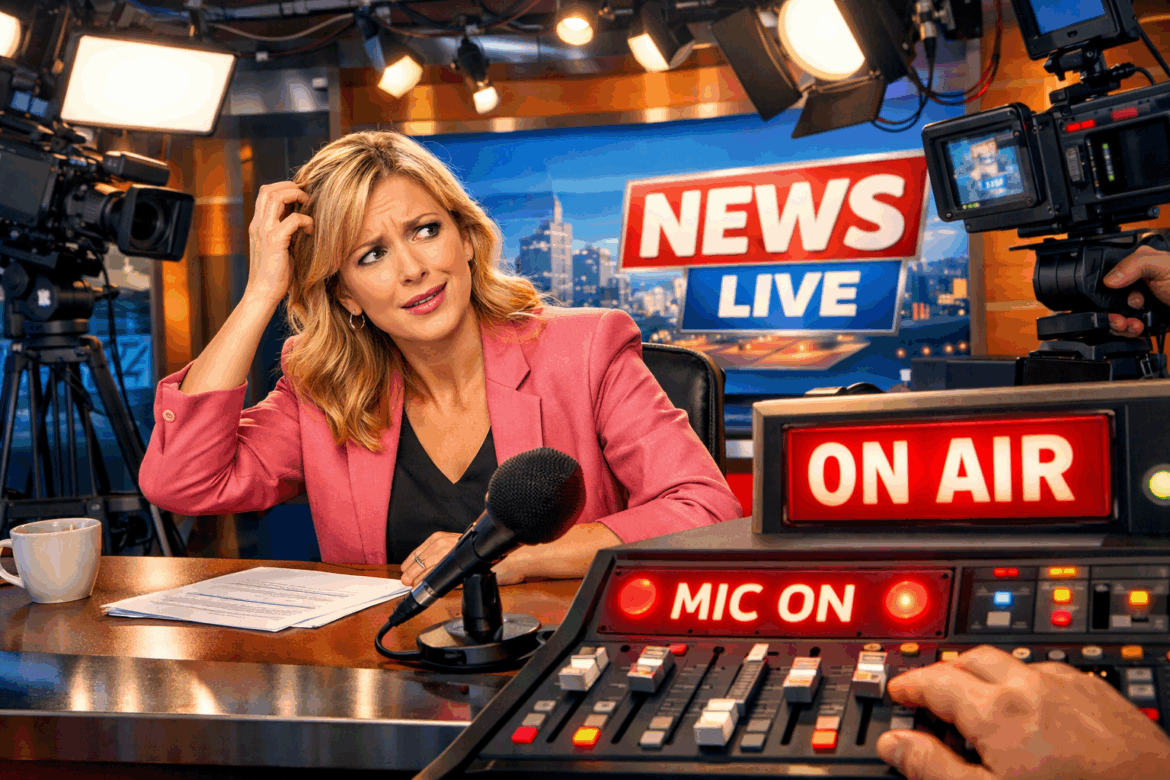
Live broadcasting is an exciting world — but it also leaves room for some unforgettable oops moments. One classic blunder is when a presenter thinks their microphone is off, starts talking casually — and suddenly the whole world hears it! Here are some funny (and harmless) examples from real life:

1. The Live Swear on Radio

British radio and TV personality GK Barry accidentally swore live on air during her BBC Radio 1 show — and immediately apologized, saying she genuinely thought her mic was off. Listeners heard her unfiltered reaction before a quick apology calmed things down.

2. Behind‑the‑Scenes Fashion Chat

During a live broadcast of BBC Breakfast, a technical glitch briefly switched the audio from the presenters to a crew member backstage. Viewers were treated to a casual conversation about whether her outfit “worked” before the mic was cut back. It was a short, unexpected peek behind the scenes — and totally innocent.

3. The Classic Hot Mic in the Newsroom

One famous case involved CNN anchor Kyra Phillips, whose microphone was left on even during a news break. The broadcast unintentionally aired a conversation about her personal life, including comments about family members, while a presidential speech was ongoing.

4. Everyday Mix‑Ups on Live TV

Across different TV shows, presenters occasionally forget to mute themselves before or after segments. Whether it’s a quiet remark to a colleague, a quick laugh, or a surprise reaction — these moments remind us that even professionals are human. (In broadcasting, this type of error is often called a “hot mic” moment.)


Why These Moments Happen

In live television and radio, microphones may stay “hot” (actively picking up sound) for technical or human reasons. When someone assumes their mic is off — but it’s not — the result can be entertaining for audiences and memorable for the hosts themselves.
Advertising

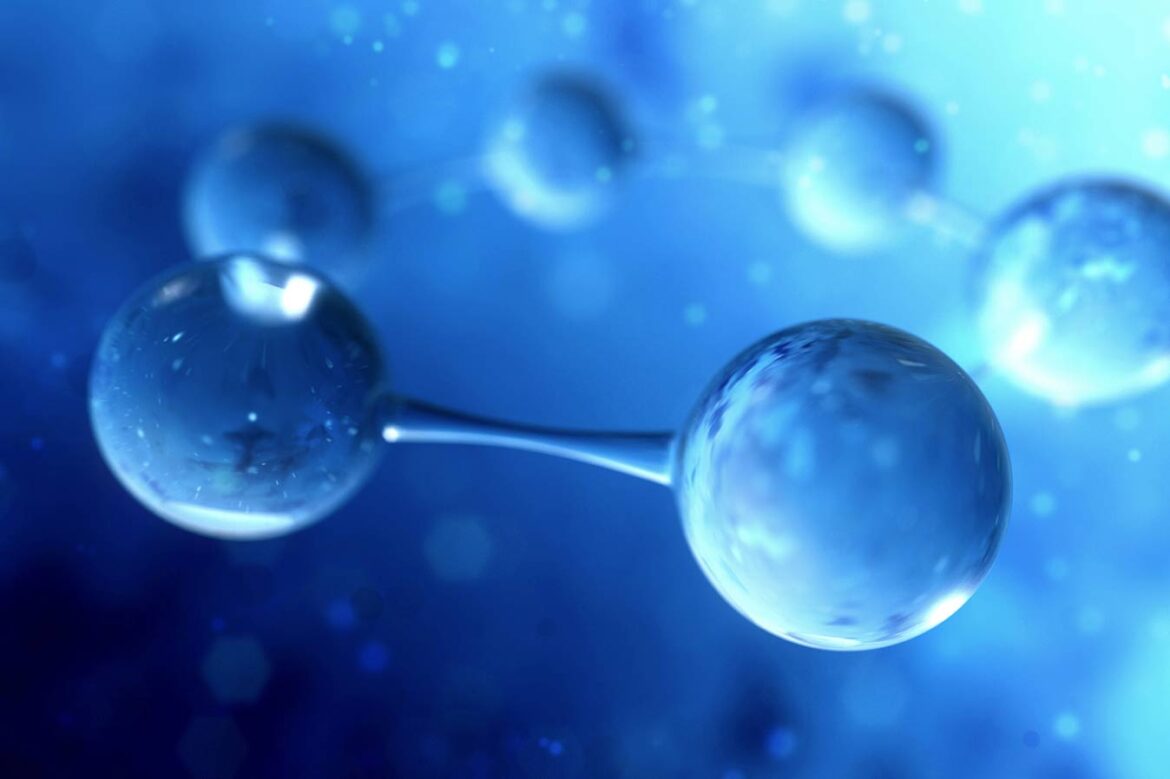
The climate crisis demands solutions. And one of the most promising is hydrogen energy. Hydrogen doesn’t emit CO₂ when burned, only water. But the challenge is how to produce it cleanly. And science has found the answer: green hydrogen.

Currently, 95{13f2645b6af6314a4316dc965591dfecacd69bb0ee32358786c540a482fa2818} of hydrogen is produced from natural gas (“grey hydrogen”), which emits CO₂. But water electrolysis, powered by solar or wind, produces clean hydrogen. The main barrier is cost. Electrolyzers are expensive, with an efficiency of around 70{13f2645b6af6314a4316dc965591dfecacd69bb0ee32358786c540a482fa2818}.

But in 2023, scientists from the Technion (Israel) created a catalyst made of nickel and iron, replacing expensive platinum. This reduced the cost by 30{13f2645b6af6314a4316dc965591dfecacd69bb0ee32358786c540a482fa2818}. The EU has launched the Hydrogen Backbone project – 28,000 km of pipelines by 2030.

Hydrogen is not for cars. Batteries are more efficient for passenger cars. But for trucks, ships, airplanes, and steel mills, hydrogen is indispensable. In 2024, Airbus unveiled a concept for a 200-passenger hydrogen plane.

Pages: 1 2

Advertising

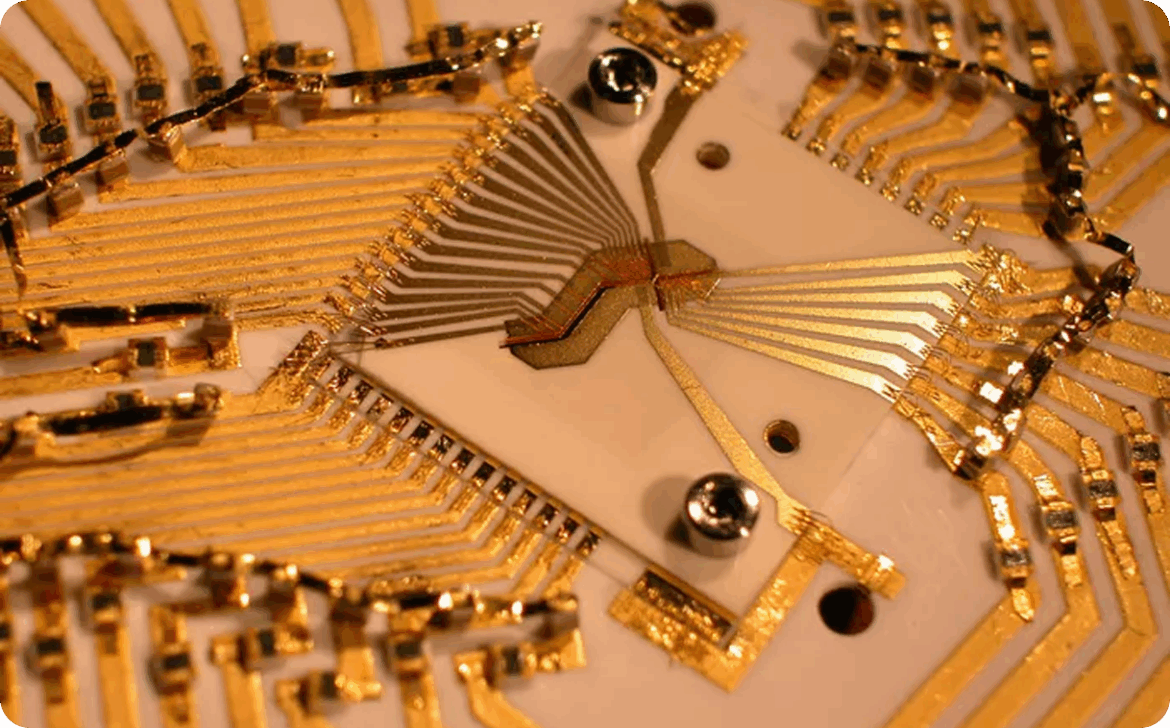
In 2019, Google announced quantum supremacy: their Sycamore processor solved a problem in 200 seconds that would have taken a supercomputer 10,000 years. This was the moment when quantum computing ceased to be science fiction and became a new stage in technological evolution.

A classical bit is either 0 or 1. A quantum bit (qubit) is a superposition: it can be 0, 1, or both simultaneously. And entanglement allows qubits to be linked so that the state of one instantly influences another – even over a distance. This violates classical logic but follows the laws of quantum physics.

Why is this important? Because some problems cannot be solved classically. For example, modeling molecules for drugs, optimizing logistics, breaking encryption. A quantum computer is not “faster.” It thinks differently.

Today, qubits are created from superconducting circuits (Google, IBM), ions (IonQ), and photons (Xanadu). But they are fragile: any interaction with the outside world destroys their state. Therefore, they are cooled to -273°C—closer to absolute zero than space.

IBM plans to create a 1000-qubit processor by 2026. But quantity isn’t everything. Quality (low error rate) is key. For now, quantum computers are needed for hybrid solutions: classical and quantum.

Pages: 1 2

Advertising

In 2012, a quiet revolution occurred. The AlexNet neural network won the ImageNet competition, recognizing images with 10{13f2645b6af6314a4316dc965591dfecacd69bb0ee32358786c540a482fa2818} higher accuracy than all previous systems. This was the moment when deep learning ceased to be a theory and became a reality. Since then, AI has transformed medicine, science, art, and everyday life.

The essence of this breakthrough lies in the architecture of convolutional neural networks (CNNs). They imitate the work of the brain’s visual cortex: they identify edges, shapes, and textures, and assemble them into a coherent whole. But unlike humans, AI can learn on millions of images in hours.

Today, AI diagnoses skin cancer more accurately than dermatologists. It analyzes tomograms, predicts epileptic seizures, and develops drugs. In 2020, DeepMind’s AlphaFold solved protein folding—a problem biologists had been struggling with for 50 years. This accelerated drug development exponentially.

But AI isn’t magic. It learns from data. And if the data is biased, AI will discriminate. For example, facial recognition systems perform worse on darker skin because the training sets were mostly Caucasian. This isn’t a technological failure. It’s a reflection of society.

Pages: 1 2

Advertising

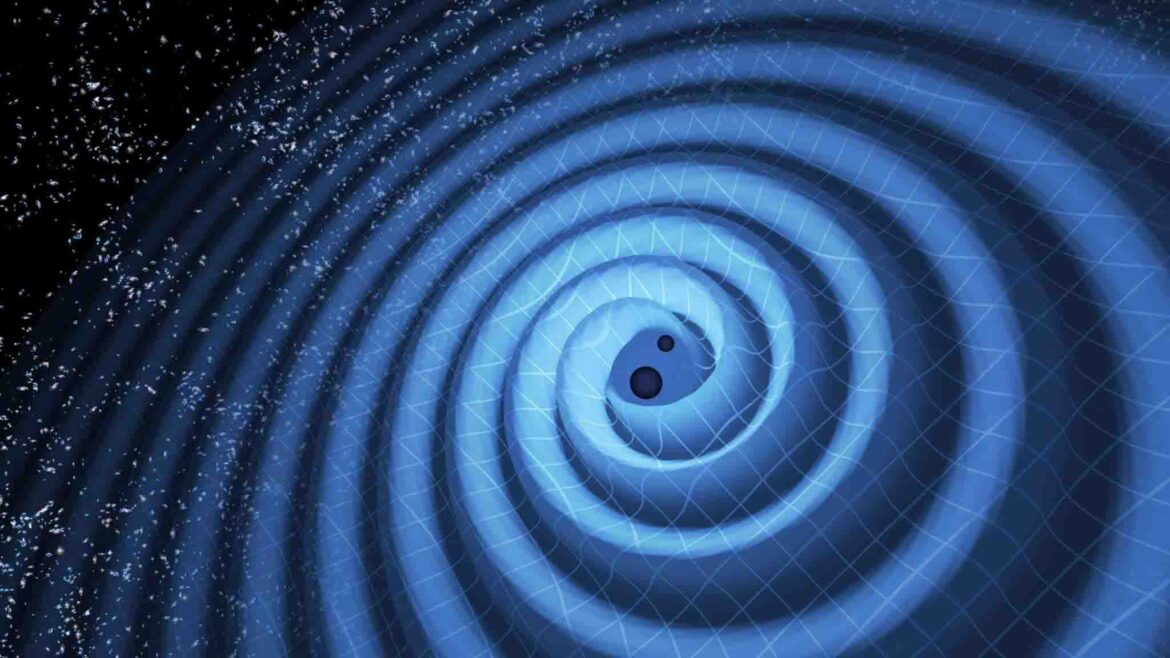
In 2015, humanity heard the cosmos for the first time. Not seen, but heard: through the faint ripples in spacetime caused by the merger of two black holes 1.3 billion light-years away. These were gravitational waves – predicted by Einstein in 1916 but thought elusive.

The discovery was made by the Laser Interferometer Gravitational-Wave Observatory (LIGO) project. Two giant detectors in the United States, each with 4-kilometer-long arms, measured changes in wavelength smaller than one-thousandth the diameter of a proton. It’s like measuring the distance to the nearest star with an accuracy of a hair’s breadth.

As the black holes (with masses of 29 and 36 suns) began orbiting each other, they emitted energy in the form of gravitational waves. In the final fraction of a second, they merged, creating a ripple that reached Earth on September 14, 2015, at 09:51 UTC. The signal lasted 0.2 seconds, but it changed astronomy forever.

Until then, we studied the universe only through electromagnetic radiation: light, radio waves, and X-rays. Gravitational waves are a new sensation. It’s as if someone who’s been blind all their life suddenly sees the world. We can now “hear” events invisible to telescopes: neutron star mergers, the birth of black holes, even possible traces of the Big Bang.

In 2017, LIGO and the European Virgo detector detected the collision of two neutron stars. 1.7 seconds later, the Fermi space telescope detected a gamma-ray burst. This was the first multi-channel observation, and it confirmed that heavy elements (gold, platinum) are born precisely in such collisions.

Pages: 1 2

Advertising

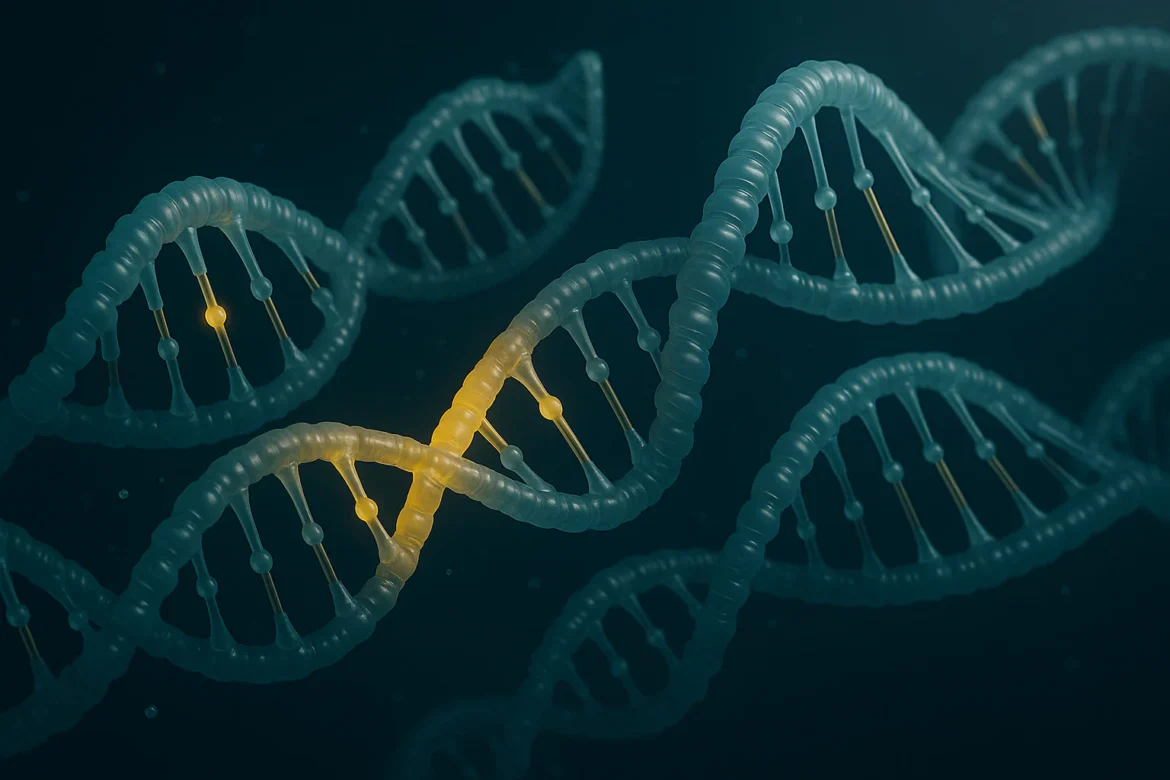
In 2012, the scientific world was shaken by a simple yet revolutionary tool: CRISPR-Cas9. It’s more than just a technology. It’s a molecular “scissor” capable of cutting and replacing sections of DNA with precision down to a single nucleotide. For the first time in history, humanity gained the ability to correct genetic errors underlying diseases previously considered incurable.

The idea wasn’t born in a laboratory, but in nature. Scientists noticed that bacteria use fragments of viral DNA as “memory” to protect against future attacks. The Cas9 system is their “immune system.” Jennifer Doudna and Emmanuelle Charpentier realized that this system could be reprogrammed. In 2020, they received the Nobel Prize—the first women to receive it in chemistry.

The essence of CRISPR is simple: scientists create “guide RNA” that finds the desired section of DNA. Cas9 makes the cut. The cell itself “repairs” the break—and if you feed it “corrected” DNA, it will integrate it. It’s like finding a typo in a book and replacing one letter without rewriting the entire page.

CRISPR is already being used in clinical trials. In 2023, the US and UK approved Casgevy therapy for the treatment of sickle cell anemia and beta thalassemia, blood disorders that plague millions. Results: 90{13f2645b6af6314a4316dc965591dfecacd69bb0ee32358786c540a482fa2818} of patients were freed from painful crises.

Pages: 1 2

Advertising

A party with friends isn’t about “a movie as background music.” It’s about shared laughter, moments that will later become memes, and quotes you’ll repeat for years. And a good comedy is a common language, understood by everyone.

The first is “The Hangover” (2009). Already a classic. A lost groom, a tiger in the bathtub, Mike Tyson… It’s madness that unites. And yes, you still ask: “Who did this?”

The second is “Bruce Almighty” (2003). Jim Carrey gains the power of God and does stupid things. But behind the humor is the question: “What would you change if you could do anything?” And the laughter here comes from recognition.

The third is “Once Upon a Time… in Hollywood” (2019). Yes, it’s Tarantino. But it’s also nostalgia, friendship, and absurdity, all wrapped up in a crazy ending. And Brad Pitt on the roof is a meme in itself.

Fourth is “Daredevil” (2012). British teenagers steal a lab-produced ape-man. It’s absurd, fast, and energetic beyond words. Just watch and laugh.

Pages: 1 2

Advertising

A cozy evening isn’t about “watching something.” It’s about an atmosphere you can immerse yourself in, like a bubble bath. Films should be warm, slow, without any sudden twists. Just peace, beauty, and a touch of nostalgia.

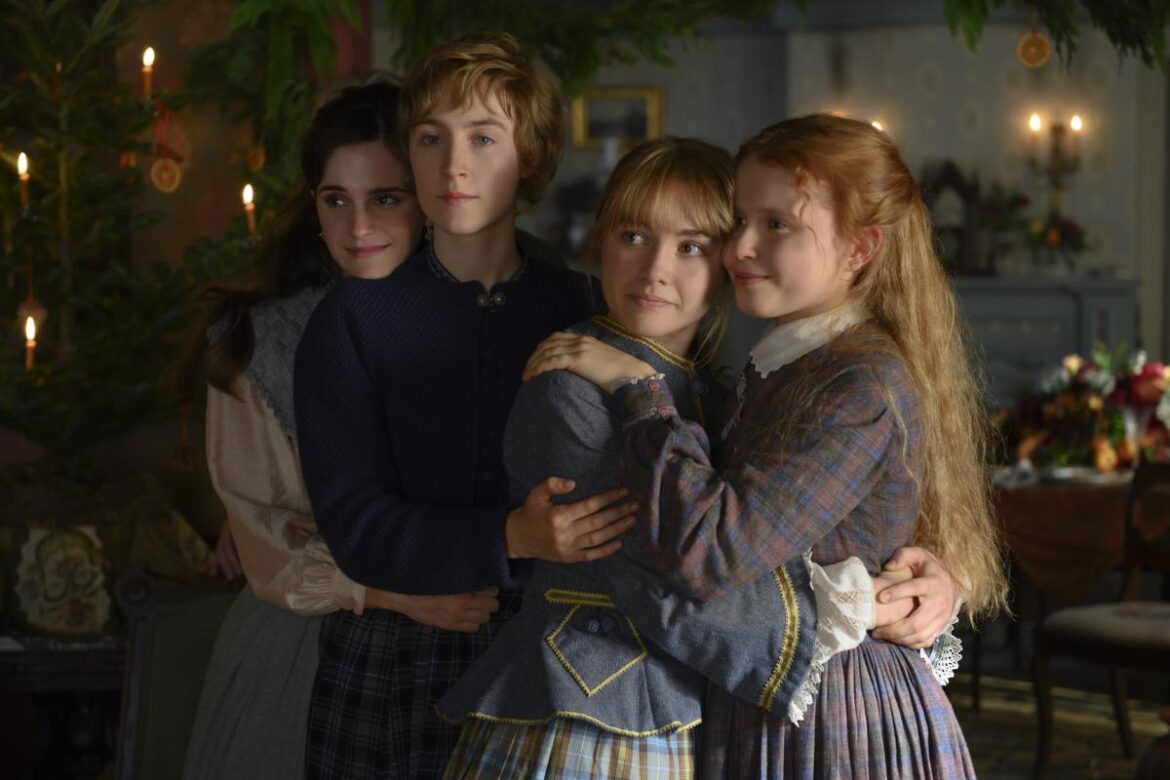
The first is “Little Women” (2019). Not a drama, but a portrait of a family. Four sisters, winter, a fire in the fireplace, conversations until the early hours. This is a film you want to watch with a cup of tea and a thick blanket.

The second is “Chocolat” (2000). It’s already been mentioned, but it deserves a repeat. The French countryside, the scent of cocoa, warm light—this is visual comfort. And the story is about how everyone deserves happiness—even if they’re “different.”

The third is “Juliet from Juliet” (2009). A British woman finds an old diary in Italy and changes her life. This is a journey without a road, where inner discovery is the key.

Pages: 1 2

Advertising

Christmas isn’t about presents. It’s about coming home, forgiveness, chance encounters, and the wonder of the ordinary. And the best Christmas movies don’t scream holiday cheer—they create an atmosphere that makes you want to hug your loved ones.

The first is “Home Alone” (1990). It’s not just a comedy. It’s a hymn to family. When Kevin says, “I want everyone to come home,” he speaks for all of us. And yes, you still check your windows on New Year’s Eve.

The second is “A Christmas Carol” (2009). This animated film with Jim Carrey is the most atmospheric version of Dickens. It’s not about ghosts. It’s about the possibility of change—even at the last minute.

The third is “Love Actually” (2003). 10 stories, 1 London, 1 Christmas. All kinds of love are here: timid, parental, friendly, and silly. And the phrase, “I don’t think marriage is magic. But I think you are magic” sounds like a vow.

Fourth is “The Polar Express” (2004). A film where faith isn’t a metaphor. It’s a real force that drives the trains into the night. And if you’ve stopped believing in Santa Claus, rewatch it.

Pages: 1 2

Advertising

A romantic evening isn’t about candles and roses. It’s about the silence after the movie, when you look at each other and realize, “We belong together.” And the right film doesn’t create illusions—it reveals the truth about intimacy.

The first is “The Notebook” (2004). Yes, there are tears. But it’s not a melodrama. This is a story about how love survives even oblivion. When memory fades, feelings remain. And this is the most powerful proof of love.

The second is “Me Before You” (2016). The film isn’t about sacrifice. It’s about choice. About how love doesn’t always save—but it always changes. And sometimes, that’s enough.

The third is “La La Land” (2016). There’s no “and they lived forever.” Here are dreams that didn’t come true, but remained in the heart. This film is for those who know: love isn’t always about “always.” Sometimes it’s about “thank you for being there.”

The fourth is “Letters to Juliet” (2010). Light, warm, Italian. But behind the beauty of Verona lies the question: “What if I say yes to my dream?” Sometimes romance isn’t passion. It’s courage.

The fifth is “Obsessed” (2013). No, it’s not a horror film. It’s a French film about a woman who loses her memory, but her husband doesn’t leave her. He writes to her every day, as if they’d just started dating. This is love that chooses to be every day.

Pages: 1 2

Advertising

Newer Posts